


















The transition from the Ninth Grade Campus (NGC) to the actual high school campus isn’t a seamless process for most students. It takes time to adjust to the sheer size difference between the two campuses, not to mention the interactions between the grade levels. However, this could be the guide everyone needs to prepare for their sophomore year at JHS. Current 2025-2026 sophomores speak about their experiences between freshman and sophomore years.

What is the hardest thing to adjust to when you move from the ninth grade campus to the high school?
“The hardest thing to adjust to when coming from the NGC to the high school is getting used to the hallways,” Tinl Jones said. “I was already familiar with the fine arts building, but navigating the halls and the breezeway was somewhat confusing. After a while, I didn’t feel puzzled walking around the main building because I just got so used to my normal route.”
“The hardest thing to adjust when you move from the ninth grade campus in my opinion, was adapting to the new environment, because you switched schools and travelled to the ninth grade campus for a class if you have a class there,” Brayden Rains said.
“The hardest thing to adjust to for me personally was the environment and the pace classes move and how I have to adjust to it individually,” Alexis White said.
The biggest factor in struggling to transition is the size of the school. Which is by all means fair; the ninth grade campus usually holds one grade at a time (approximately 450 people) while the high school holds three grades (1,350 people). This is especially true if the student didn’t have any classes at JHS during their freshman year.
How do the interactions among grades throughout sophomore year differ from freshman year?
“Freshman year we really only interacted with people outside of our grade in the extracurricular we are in,” Corbin Morrison said. “So if we weren’t in extracurriculars we really didn’t interact with them. Now sophomore year I have class with juniors.”
“Interactions as a sophomore seem easier than last year because last year was hard for me to socialize, but now this year it is really easy for me to socialize with other people and I am happy about that,” Rains said.

“During my freshman year I was usually treated as a little kid by some upperclassmen,” Jones said. “It didn’t bother me a lot since I knew these people were just joking and messing around. I was never treated as someone who could be of any authority, which is understandable since I was younger and less experienced than the upperclassmen. Once I became a sophomore, it seemed to me like people cared a little less about me. A lot of the upperclassmen I was friends with either had some type of drama going on or they simply just didn’t care to have someone they couldn’t call a little kid anymore. It’s odd how going from a freshman, who is treated like a baby, to a sophomore who isn’t seen as anything but a regular kid. I understand seeing a sophomore as some normal student, but having that somewhat drastic change in just a few months is weird.”
“The interactions among grades throughout sophomore year differ from freshman year change a lot, where you used to not be close and interact with upperclassmen you know see them everyday and get a lot closer to them,” White said.
So, good news for the freshman–no longer the babies of the campus. The ninth grade campus really separates upperclassmen from the freshman making it more difficult for the grades to interact with each other. When the grades collide, one never knows what will happen.
In athletics, how is your sophomore year different from your freshman year?
“My sophomore year was different because I changed my perspective to [improve] my success. I take the little details I used to bypass and really focus on those small things that have really truly set apart my freshman year and sophomore years miles apart,” White said.
“Freshmen are typically put to the test a tad bit more than other grades and they’re just trying to prove themselves, while other grades sort of just thrive,” Sarah McWilliams said.
“In athletics I became a much more confident player as a sophomore because I wasn’t scared that the coaches thought I was bad and I began to grow connections and relations with people to allow me to come out of my shell,” Alexis Bunch said.
Experience is a key part of being an athlete. Although there isn’t a large experience difference between freshman and sophomore year, the range of growth can be seen.
Do the coaches or upperclassman teammates treat you differently? If yes, how?
“Absolutely. During freshman year coaches will not go easy on you,” McWilliams said. “They’ll be super rough and definitely test your patience and ability to stay game ready.”
“I do think that coaches treat everyone differently depending on what they have been through and the character of the athlete but overall most of the coaching staff is awesome,” Bunch said.
“The upperclassmen treat me slightly differently because I haven’t been playing with them for as long but after you start playing with them and actually being yourself, they will accept you and treat you the same,” Bunch said.
“The upperclassman teammates have gotten so so much closer and really support and have faith in my abilities,” White said.
“Whether upperclassmen or teammates treat you differently often depends on the specific team culture and the sport, but generally, there are common dynamics at play,” Parker Hubbard said.
Whether it is how athletes are perceived by coaches or how teammates trust one another, there is a slight differentiation in treatment. After a season with the team and coaches, little details start to seep into routines and training. Coaches will give feedback on what needs improvement, or what one thrives on, helping the athlete get an edge for the following season.
When attending other sporting events, is it more enjoyable your sophomore year?
“Yes, sophomore year is generally more enjoyable for attending other sports as a football player because you are no longer a new, unknown freshman. By the second year, you have established familiarity with peers, increased your visibility and developed friendships across different teams, leading to more recognition, conversation and social interaction,” Hubbard said.
“It is more enjoyable as a sophomore because you know more people and you actually know the people on the teams,” Bunch said. “I have experienced a drastic difference in the amount of people I talk to at sporting events because now I can walk up to anyone and hang out with them.”
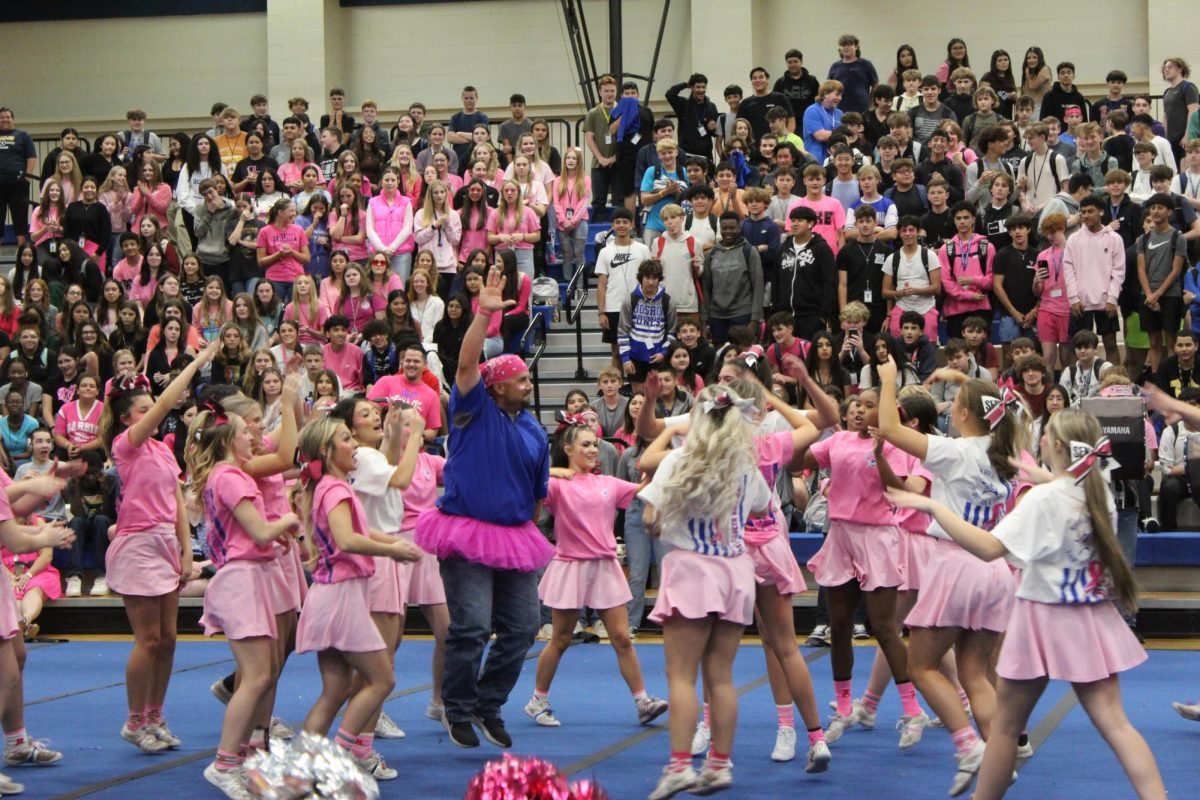
The student section at football games is a great example of the difference between the years. Freshman tend to be on the outskirts of the group while sophomores, juniors and seniors are right in the middle of the action.
Do upperclassmen treat you differently? (Band, Dance, UIL, Sports Med, etc.)
“In band, people either treat you completely differently or nothing changes because of your grade [level],” Jones said. “My freshman year, I was only treated like a younger kid by mainly seniors or juniors. The main change from when I became a sophomore is that all other grades see me as an equal rather than an inexperienced kid.”

“Not particularly, but when you’re a sophomore, it’s easier to become friends with upperclassmen because you’ve known them for longer and can spend more time with them,” Kate Wood said.
“The upperclassmen in Sports Med this year do treat me differently but that’s just because of how close that class is and that’s how they are towards everyone.” Bunch said.
“I mean, yeah kind of,” Ana Compian said. “Some, I think, I was just too nervous to talk to but others were usually nicer to talk to than a lot of other people.”
As with athletics, experience changes the treatment of coaches and upperclassmen. More responsibility is handed out to sophomores than the freshman class in all aspects of the school’s patriarchy.
Is it more enjoyable being a sophomore rather than freshman? (Band, Dance, UIL, Sports Med, etc.)
“It is partly more enjoyable to be a sophomore in band because I am able to help others,” Jones said. “I love being able to aid others in their troubles because as a freshman I wasn’t able to help people because I simply didn’t know how to help. Now that I am a sophomore, I can help other people because I know what I am doing and I have more leadership skills.”
“Yes. It’s nicer being a sophomore than a freshman because there’s more opportunities to do fun things in extracurriculars after freshman year,” Compian said. “It was all about learning the basics.”
“Definitely! We get food truck, the Powder Puff game and so much more,” Damian Hardy said.
As time goes on, privileges are added to a high-schooler’s life. Sophomores get to go to the powder puff game, while juniors and seniors get to participate in it. Sadly, freshmen are not included in the powder puff fun.
What advice do you have for the incoming sophomores?
“Go make friends outside of your small circle,” Morrison said. “It can be scary but nowadays my best friends aren’t in my grade.”
“My advice is to prepare yourself, and don’t give up when it gets hard just keep pushing through,” Bunch said.
“Keep up with your grades and get to class on time because a lot of the teachers here are very strict about [punctuality],” McWilliams said.
“I advise all incoming sophomores to keep those who are dear to you, and try your best to expel those who bring you down,” Jones said. “It is never healthy to keep someone who is unhealthy in your life for any reason. You could feel like it is an obligation to be nice and considerate to people even when they do you wrong, but when others don’t care about your feelings nor situation, you should not have to keep them around.”
This information could be taken as a cautionary tale or as someone’s personal advice column. Whatever the need is, remember that there’s always a new day tomorrow.