

















The buzz of notifications used to be as common as the late bell at Joshua High School. Screens lit up under desks. Mid-day messages flew between classes. Emails appeared in inboxes between assignments.
But during the 2025–2026 school year, that signal changed.
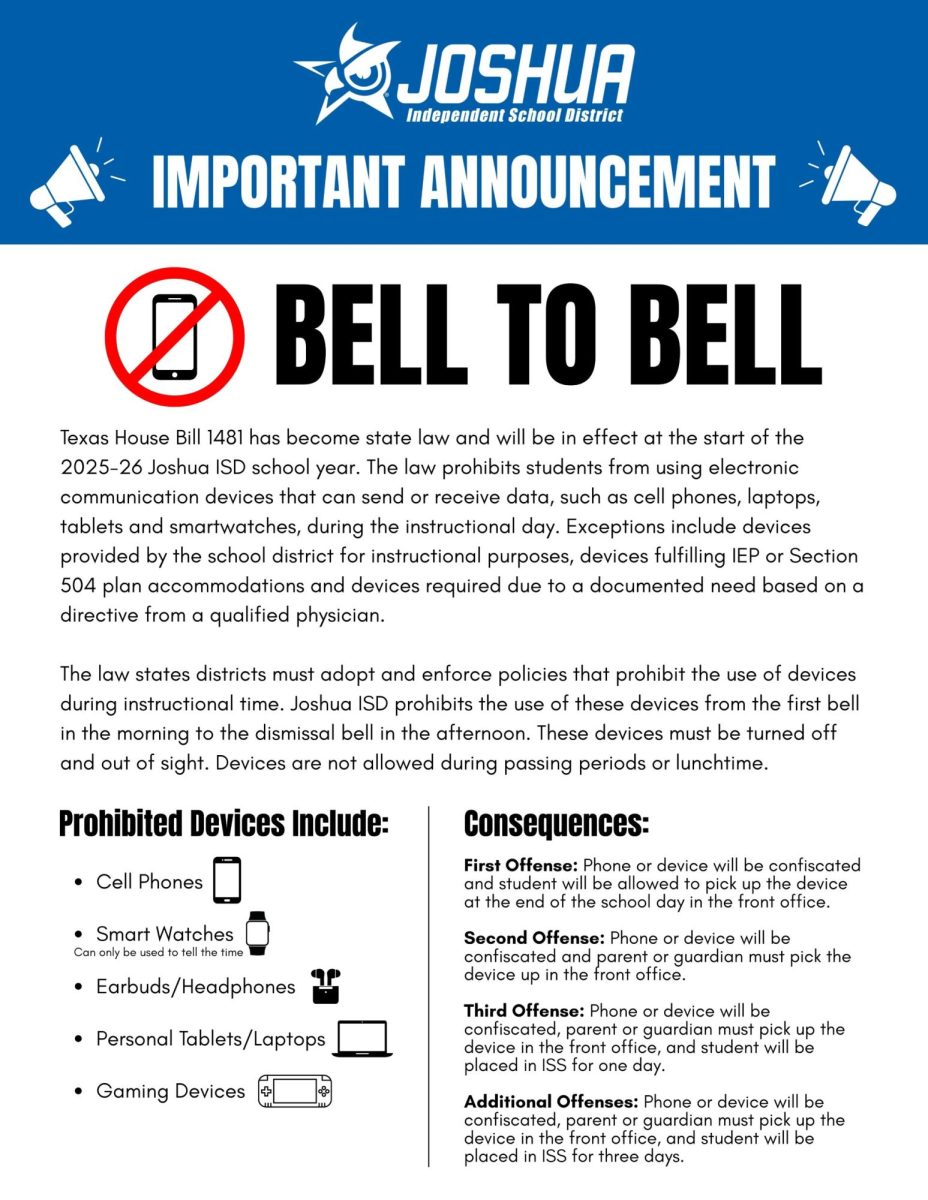
After multiple phishing incidents, an internal email restriction, and the enforcement of the statewide phone ban in Texas, digital safety has moved to the forefront of conversation. The overall focus remains centered on protecting students and restoring attention to learning.
“Naturally, when there is internet and teenagers involved, there is always the potential for concerns,” senior English teacher Celeste Zachry said. “However, it seems that this year there have been significant phishing attacks, brought about by our own students.”
At first, many students did not recognize the severity of the situation. Phishing scams are often thought of as distant threats. However, as more inboxes were targeted, the reality became harder to ignore.
“To my knowledge, phishing scams first became a major concern within the district this school year, 2025–2026,” senior Brian McCormick said. “The reason for this significant increase in concern is most likely due to the fact that these phishing emails seem to be disguised as a teacher [or student].”
As the incidents spread, conversation spread with them. What may have started as a few deceptive emails quickly evolved into a district-wide concern.
“These specific incidents originally began/escalated due to how well they were formatted and how little students knew of phishing scams,” McCormick said. “Students would see these emails, without much knowledge of these scams and immediately trust them as the first source seemed valid.”
Although the district provides annual digital training through Neptune Navigate, the incidents revealed that awareness does not always translate into action. Many students complete required modules without expecting to encounter a real threat.
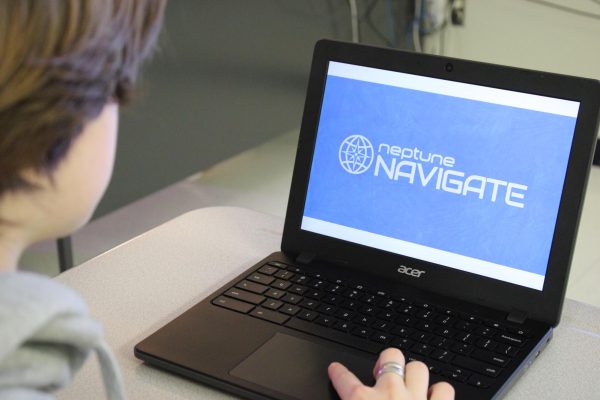
“Preventative measures are always taken, but I don’t think students take it seriously,” Zachry said. “Neptune Navigate is mandatory training every year, yet here we are. When we were actually hit hard this school year, a variety of things were done, but I’m not in-the-know of them.”
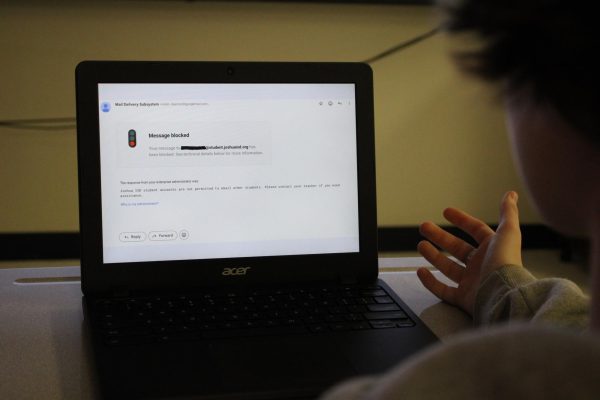
The district limited certain student email capabilities, particularly communication outside district domains. The goal was to reduce the opportunity for misuse and protect students from both internal and external threats.
“Students, before the email ban, had the potential to use it to harass other students with the knowledge that the district was watching them,” McCormick said.
Even with safeguards in place, digital responsibility remains an ongoing lesson. Technology itself is neutral — how it is used determines its impact. Some students acknowledge that misuse has not entirely disappeared.
“Though I don’t know the full extent of how it impacted the district, students are using their Chromebooks (devices) to continue doing things and sending things with malicious intent,” Zachry said.
Despite the positives, the communication limits have created real obstacles. School journalism, collaboration, and even simple coordination require more effort. The convenience students once relied on is no longer readily available.
“As the Newspaper teacher, the lack of ability to reach out to other students has caused my staff a lot of difficulty,” Zachry said. “A perfect example is this particular story — it’s almost impossible to get good, lengthy quotes from other students.”
Students themselves have observed the difference. The constant stream of notifications that once interrupted concentration has slowed. Peer pressure to respond instantly has faded during the school day.
“I’ve noticed that I never get mid-day messages anymore from people in my classes. Nobody is blowing up my phone for answers or asking me something drama related,” senior Vee Hewett said. “I think that when students have their phones, they cause real stress and impairment to others who are simply trying to get an education.”
Though, for some the impact is more personal. Contacting family during the school day now requires planning and patience. While emergencies are still accommodated, routine communication feels less accessible.
“Personally, I feel like it doesn’t affect me within my circle of peers as much as it does with my parents. When phones were banned, I would have to do a lot of work arounds just to reach my mom. Whether I had an important question, or just simply needed her, it has been difficult to reach out,” Hewett said. “Personally, I don’t need to communicate with anyone unless it’s urgent, so when I do need to reach someone, the lack of communication and urgency is very stressful.”
With fewer digital interruptions, classroom dynamics have subtly shifted. Conversations feel more natural. Participation has increased in small but noticeable ways.
“The staff members, from a student’s perspective, do not seem to have changed how they provide lessons or anything of the such, but they seem to be more aware. Students have definitely acknowledged this as seen with those who still try to use their phones after the ban,” McCormick said. “These students seem to be paranoid and on edge especially. There are definitely some positives from the ban such as students being slightly more talkative and active during class.”
Not only students have noticed this issue, but teachers too. This change from staring at mobile screens has finally changed to involvement in the classroom with both teachers and other students.
“With my room being as close to where our lunch is now, the amount of noise that I can hear you wouldn’t have heard last year at lunch because of phones is impressive. My classes are louder because I think people — kids — are communicating more,” world history teacher Tanner McGaughey said. “I can deal with it being louder as long as we’re learning to communicate. I think that’s something that phones have taken away from us, and this phone ban has now kind of forced students to come back to face-to-face communication.”